
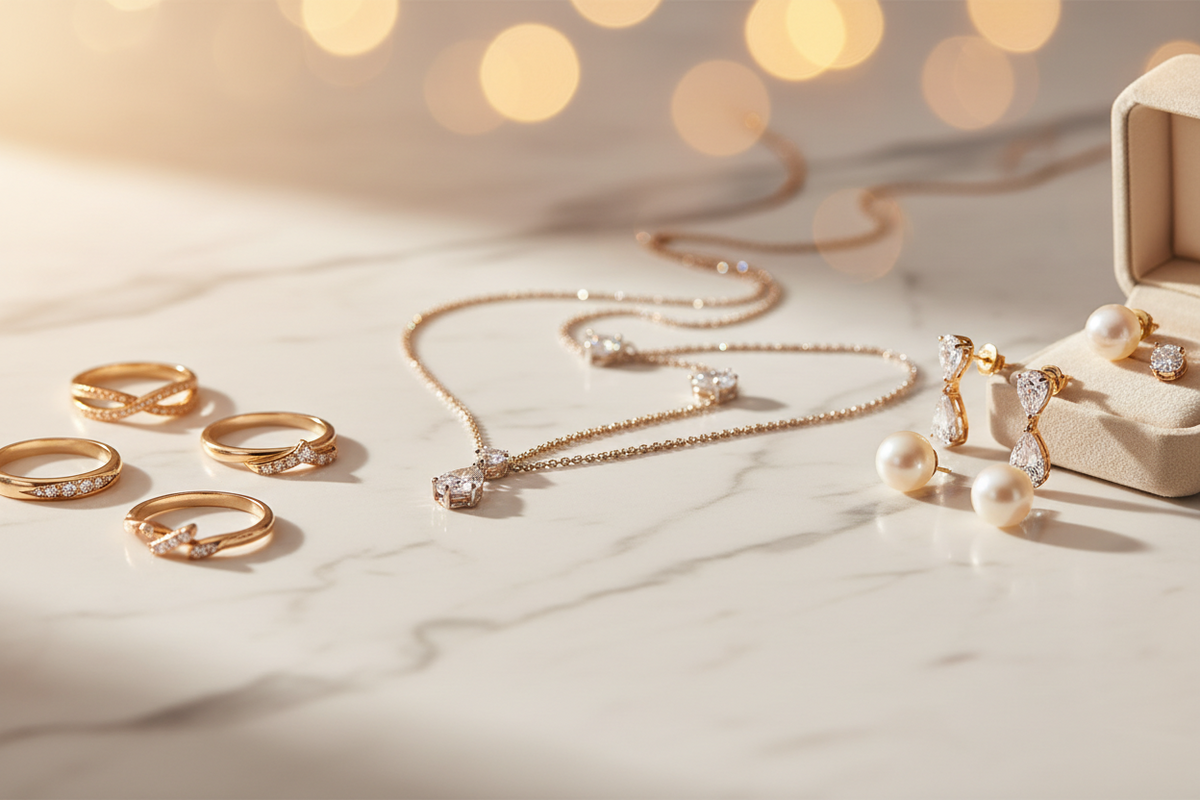
Two beautiful diamonds. Two different origins. How do you know which one is right for you?
If you've been shopping for an engagement ring or browsing diamond jewelry lately, you've probably heard the terms lab-grown and natural diamond. You may have even wondered whether one is better than the other.
It's one of the most important distinctions to understand when purchasing diamond jewelry, and the answer might surprise you.
At Castles Jewelry & Gifts, we believe choosing the perfect piece should feel exciting, not overwhelming. Whether you're planning a proposal, celebrating an anniversary, or treating yourself to something special, understanding your options makes it easier to shop with confidence.
Let's take a closer look at what makes these diamonds different and what they have in common.
First Things First: Are Lab-Grown Diamonds Real Diamonds?
Yes! Lab-grown diamonds are real diamonds.
Despite what you may have heard, lab-grown diamonds aren't fake, imitation, or simply pieces of glass designed to resemble the real thing.
Both laboratory-grown and natural diamonds are made of carbon atoms arranged in the same crystalline structure. They share essentially the same chemical composition, hardness, and optical properties.
That means a lab-grown diamond can offer the same beautiful sparkle and brilliance as a natural diamond of comparable quality.
The biggest difference isn't necessarily what you see. It's how the diamond was created.
How Are Natural Diamonds Formed?
Natural diamonds form deep beneath the Earth's surface under extraordinary heat and pressure.
This process takes place naturally over immense periods of geological time. Many natural diamonds began forming billions of years ago, long before humans ever existed.
Over time, volcanic activity carried diamonds toward the Earth's surface, where they could eventually be discovered and mined. For many jewelry buyers, this extraordinary history is part of their appeal. A natural diamond is more than a beautiful gemstone. It's a small piece of Earth's history, formed through a process that cannot be recreated on a human timescale.
How Are Lab-Grown Diamonds Made?
Lab-grown diamonds are created in controlled environments using specialized technology that allows diamond crystals to grow.
Two primary methods are used:
-
High Pressure, High Temperature (HPHT): This method uses intense pressure and heat to create conditions that support diamond growth.
-
Chemical Vapor Deposition (CVD): This method uses carbon-rich gases to deposit carbon onto a diamond seed, gradually building a diamond crystal.
Unlike natural diamonds, which develop through geological processes, laboratory-grown diamonds can be produced in a matter of weeks.
Once grown, these diamonds can be cut and polished into many of the same beautiful shapes as natural diamonds, including round, oval, emerald, cushion, pear, and radiant cuts.
Can You Tell the Difference Just by Looking?
Here's something many shoppers find surprising:
You generally cannot distinguish a lab-grown diamond from a natural diamond with the naked eye.
Both can display exceptional brilliance, sparkle, and clarity. Even experienced jewelers may need specialized testing equipment or an independent gemological laboratory to confidently determine a diamond's origin.
And no, traditional at-home diamond tests cannot reliably tell you whether a diamond is natural or laboratory-grown. This is why accurate documentation and clear information about the diamond you're purchasing are so important.
What About Sparkle, Quality, and Durability?
Both natural and laboratory-grown diamonds are diamonds, meaning they share the same exceptional hardness of 10 on the Mohs scale.
Both are suitable for engagement rings and other jewelry intended for regular wear.
However, not every diamond sparkles equally.
A diamond's appearance depends on several characteristics commonly known as the Four Cs:
-
Cut: How effectively the diamond's proportions and finish reflect light.
-
Color: The presence or absence of noticeable body color.
-
Clarity: The visibility and characteristics of internal inclusions and surface features.
-
Carat Weight: The measurement of the diamond's weight, not its exact physical dimensions.
These characteristics matter regardless of how the diamond was created. A beautifully cut lab-grown diamond may sparkle more brilliantly than a poorly cut natural diamond, and vice versa.
The origin of a diamond alone does not determine its beauty.
Why Are Lab-Grown Diamonds Usually Less Expensive?
One of the biggest differences shoppers notice is the price.
Lab-grown diamonds typically cost significantly less than natural diamonds of comparable size and quality. Because laboratory production can be repeated and scaled, lab-grown diamonds are generally more accessible from a pricing standpoint.
For customers shopping within a specific budget, this can create exciting possibilities. You may be able to choose a larger center stone, explore a different diamond shape, or put more of your budget toward the ring setting.
Natural diamonds, meanwhile, carry different pricing considerations, including their geological origin, market supply, and established resale markets.
It's important to remember that purchase price and future resale value are not the same thing.
Neither type of diamond should automatically be treated as a guaranteed financial investment. Resale prices depend on market conditions, quality, documentation, and the individual piece.
Which Diamond Should You Choose?
There's no universal answer because everyone values different things.
A natural diamond may appeal to you if:
-
You love the idea of owning something created naturally over billions of years.
-
The rarity and geological history of your diamond are meaningful to you.
-
You prefer a natural gemstone for personal or traditional reasons.
A lab-grown diamond may appeal to you if:
-
You want the beauty and durability of a diamond at a lower purchase price.
-
You're interested in exploring larger stones within your budget.
-
You enjoy the idea of diamonds created through modern technology.
Neither choice makes your jewelry more or less meaningful.
An engagement ring becomes special because of the commitment it represents, not because everyone agrees on which diamond you should have chosen.
What Should You Ask Before Buying a Diamond?
Whether you're shopping for a lab-grown or natural diamond, we recommend asking a few questions before making your decision:
-
Is this diamond natural or lab-grown? Its origin should always be clearly identified.
-
What do I know about its quality? Ask about the cut, color, clarity, and carat weight, along with any available grading or quality documentation.
-
Does this diamond fit my budget? Remember to consider the setting, metal, and overall design.
-
What maintenance will my jewelry need? Even durable gemstones require properly maintained settings.
-
Can I compare different options? Seeing different shapes, sizes, and styles in person can make your decision much easier.
A good jewelry-shopping experience should leave you feeling informed and comfortable, not pressured to make a decision before you're ready.
Find Your Perfect Diamond at Castles Jewelry & Gifts
At Castles Jewelry & Gifts, we've helped Eastern Kentucky families celebrate life's special moments since 1937.
We understand that choosing diamond jewelry is personal. Some customers know exactly what they're looking for, while others are just beginning to explore their options. Both are welcome.
Whether you're interested in natural diamonds, curious about lab-grown options, or looking for inspiration for a custom engagement ring, our team is here to help you understand your choices.
Visit our showroom at 4414 N Mayo Trail in Pikeville, Kentucky, and let us help you explore diamond jewelry at your own pace, because the best diamond isn't necessarily the biggest, the rarest, or the most expensive.
It's the one that's right for you.